
Local Presence Dialers Are Dead: What Works in 2026
Local presence dialing used to lift answer rates. Here's why area-code caller ID rotation no longer works and what insurance agents are doing instead now.
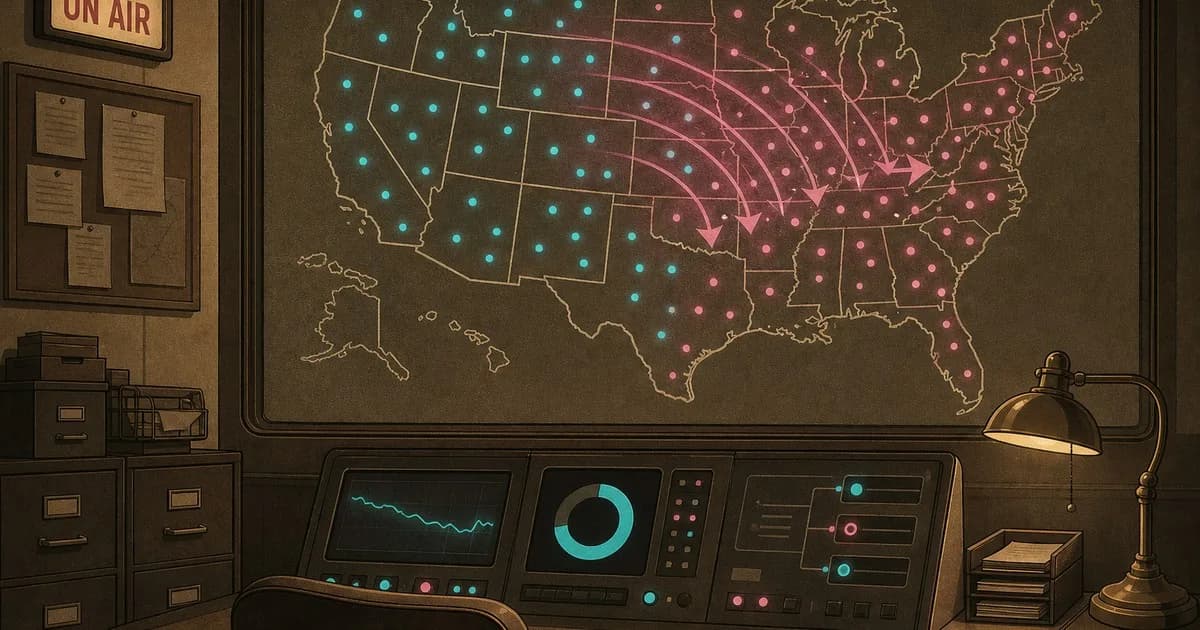
Local presence dialing produced real answer-rate lift from roughly 2014 through 2020. That lift has collapsed. Carrier analytics, STIR/SHAKEN attestation, and consumer-side call screening now treat rotating local numbers as one of the clearest signals of an outbound spam operation, which is why even compliant agents see rented local-presence pools burn out within days.
If you are still relying on local area-code matching to hit contact rate targets, the strategy is working against you. The mechanics that made it effective are the exact mechanics that now flag it.
What was local presence dialing supposed to do?
The pitch was simple. A prospect in area code 414 is more likely to answer a 414 number than an 800 number or an out-of-state DID (Direct Inward Dial). Dialers sold rotating pools of hundreds or thousands of local numbers, matching the outbound display to the recipient's NPA-NXX on a per-call basis.
For a while the lift was real. That era ended. Here is what changed.
How did carrier-side analytics get faster?
In 2014, carrier spam analytics were batch-scored, often updated nightly. Today the major terminating carriers (and the analytics vendors behind them: Hiya, TNS (Transaction Network Services), First Orion) score at or near call-setup time. A number that fires high volume in a short window, hits an elevated short-duration rate, and shares origination fingerprints with hundreds of other numbers on the same trunk is tagged quickly. Hiya's State of the Call report documents how analytics models now surface risk labels such as "Spam Risk" and "Scam Likely" on recipient screens in near real time.
How did STIR/SHAKEN attestation expose rented-pool patterns?
The STIR/SHAKEN framework (Secure Telephone Identity Revisited / Signature-based Handling of Asserted information using toKENs), with core implementation required under 47 CFR § 64.6301 since June 30, 2021, requires originating voice service providers to attest to whether the caller is authorized to use the displayed number. The FCC's call authentication framework defines three attestation levels: A (full), B (partial), and C (gateway). Rented local-presence numbers typically receive B-level attestation because the dialing platform cannot cryptographically assert ownership of a number it is only leasing for a shift. That attestation gap is visible to terminating carriers and factors into the spam score.
How have consumers trained themselves to ignore matching area codes?
The biggest shift is behavioral. After roughly a decade of spoofed neighbor calls, consumers no longer treat a matching area code as a signal of a local caller. Hiya's 2024 State of the Call research reported that 46% of unidentified calls go unanswered even when they are legitimate businesses, and that 92% of consumers believe unidentified calls are fraudulent.
"Unknown local numbers get the same treatment as '800' now. I don't even look. Straight to voicemail." (commenter on VoIP.ms community forum discussion of STIR/SHAKEN attestation, paraphrased community sentiment consistent across r/VOIP, r/sales threads on the same topic.)
What does the burn-rate math actually show?
Rented local-presence pools now burn out in days, not months. Patterns we see across P&C outbound teams:
| Pool Configuration | Days Until Flagged | Answer Rate Day 1 | Answer Rate Day 7 |
|---|---|---|---|
| 50-number rotating local | 2-4 days | 9-12% | 2-4% |
| 250-number rotating local | 4-7 days | 8-11% | 3-5% |
| 1,000-number rotating local | 7-14 days | 7-10% | 4-6% |
| 10 owned, warmed DIDs (fixed) | Stable | 6-8% | 6-8% |
The counter-intuitive finding: a small pool of owned, warmed, properly registered DIDs outperforms a massive rented rotating pool within one week of launch, and stays stable if maintained.
Why does throwing more numbers at the problem fail?
A common instinct is to throw more numbers at the problem. It does not work for three reasons.
Shared reputation poisoning. Rented pools are typically assigned from a carrier's shared inventory. If the previous tenant burned a number before you got it, you inherit the score. Many local-presence pools are recycled aggressively. Carrier number aging windows are set under 47 CFR § 52.15 at a minimum of 45 days, which is often insufficient to clear spam flags.
Origination fingerprinting. Analytics vendors do not score only the displayed number. They score the originating trunk, the SIP signature, the call-timing distribution, and the answer-machine-detection pattern. A 2,500-number pool originating from the same carrier trunk looks identical to a 250-number pool. The fingerprint is the tell.
Compliance exposure. The FCC's updated rules on consent revocation (FCC 24-24, CG Docket 02-278, with effective dates rolling through 2025-2027) create enforcement risk for operations that cannot demonstrate a clear ownership chain for displayed numbers. Rented rotating pools make that chain harder to document.
What architecture actually produces reliable contact rates now?
The operators still producing reliable contact rates have shifted to a different architecture.
Why does a small pool of owned, warmed DIDs win?
Instead of 500 rented DIDs, a single producer runs 8 to 15 owned DIDs acquired through a carrier relationship, warmed over 2 to 3 weeks with graduated call volume, and monitored continuously for flag status. More work upfront, dramatically cheaper and more stable over 90 days.
How does branded caller ID (rich call data) lift answer rates?
Branded calling programs display a business name and logo on the recipient's screen across the three major US mobile networks. The FCC's call branding proceeding (FNPRM, October 2025) documents the framework carriers are standardizing on. Hiya reports that 77% of consumers are more likely to answer when they know who is calling, which is what branded identity provides.
Why is matching CNAM registration the highest-ROI fix?
A DID (Direct Inward Dial) displaying "UNKNOWN CALLER" or an outdated CNAM (Caller ID Name) gets screened. A DID displaying "SMITH INSURANCE AGENCY" that matches the company the prospect has a relationship with gets answered. CNAM registration is the single highest-ROI fix for most agents still running legacy local-presence setups, and the area-code-match myth explains why matching the prospect's area code no longer carries the weight it once did.
"Caller ID should be mandatory. No person or organization should be able to hide behind 'unknown caller.'" (consumer commenter summarized in TransUnion/Numeracle analysis of caller identity tech.)
Why should I segment DID pools by call intent?
Outbound cold prospecting, warm follow-up, and customer service all benefit from separate DID pools. Mixing them pollutes the reputation of the warm-follow-up numbers, which are the ones doing the real revenue work. See our companion piece on why sharing the same numbers office-wide gets you flagged.
What does a 45-day transition plan off rented local presence look like?
A staged transition over 30 to 45 days preserves pipeline while you rebuild.
| Week | Action |
|---|---|
| Week 1 | Audit current pool. Identify top 15 performing DIDs. Check flag status on each. |
| Week 2 | Register CNAM on surviving DIDs. Begin warming 5 replacement DIDs at low volume. |
| Week 3 | Reduce rotating pool by 50%. Shift volume to owned DIDs. |
| Week 4 | Deprecate remaining rented rotation. Full volume on owned pool. |
| Week 5-6 | Enroll owned DIDs in branded caller ID program. Monitor flag status weekly. |
What questions do agents ask most about local presence dialing?
Does local presence still work in any market?
Marginally, for older demographics in rural markets, and generally only for the first 24 to 48 hours of a fresh number. The economics no longer support it as a primary strategy.
Is rotating caller ID illegal?
Not inherently. Displaying a number you are authorized to use is legal. Legal risk arises when rented pools make the ownership and authorization chain ambiguous, which can implicate caller ID authentication requirements under the TRACED Act and associated FCC rules.
How many DIDs does a single producer actually need in 2026?
For most single-office agencies doing under 500 dials per producer per day, 6 to 10 owned and warmed DIDs per producer is sufficient. Insurance forum practitioners commonly cite 100 to 250 dials per day per agent as the working range, which spreads cleanly across a small owned pool.
How long does warming a new DID take?
Two to three weeks to reach stable answer rates. Warming means graduated daily call volume (for example, 50, then 150, then 300+) with emphasis on completed conversations in the early days.
Should I abandon local presence entirely?
Some teams run a small pool of owned local DIDs matched to their primary sales territory. That is different from rotating rented local presence and can work, provided the numbers are genuinely owned and properly registered.
What about SMS from the same numbers?
10DLC (10-digit long code) registration for SMS is a separate compliance track. Numbers used for both voice and SMS require CNAM registration and 10DLC brand and campaign approval. Running SMS on a rotating pool is not feasible under current 10DLC rules published by The Campaign Registry.
How do I know if my current numbers are flagged?
Run a cross-carrier audit. Self-testing by dialing your own phone from each DID misses carrier-specific flags that only appear to recipients on other networks. A tool like LineShield surfaces the cross-carrier picture in one place.
What attestation level do my calls carry today?
Check recent call logs or ask the carrier. Full A-level attestation is the target. B-level is common for reseller and rented-pool arrangements and correlates with more frequent spam labeling, as explained in TransNexus's STIR/SHAKEN reference documentation.
Where is the category going next?
The industry is moving toward identity-verified calling. The combination of STIR/SHAKEN attestation, branded caller ID, CNAM accuracy, and verifiable call purpose is replacing the old "trick them into answering" model with a "prove who you are" model. Agents who make that shift early are pulling ahead of competitors still running 2018-era playbooks.
Local presence is not coming back. The sooner the operation retools, the sooner the answer rate stabilizes.
Are you ready to see which of your DIDs are flagged?
LineAudit checks your first 5 DIDs free. You'll see exactly which numbers are flagged, mis-registered, or at risk in 30 seconds.
LineShield is operated by licensed P&C insurance agency owners, serving captive and independent agents across the U.S. Read more about our team.
How we review: every guide is drafted from carrier and analytics-partner documentation, then fact-checked against live dialer data, because reputation rules shift constantly. Additionally, we re-verify each guide when carrier behavior changes.
Corrections: if you spot an error, contact us at customerservice@theidudes.com and we will fix it promptly.