
Area Code Match Myth: What Really Moves Contact Rates
Does local presence dialing still lift contact rates in 2026? The data says yes, but far less than vendors claim and only under specific, narrow conditions.
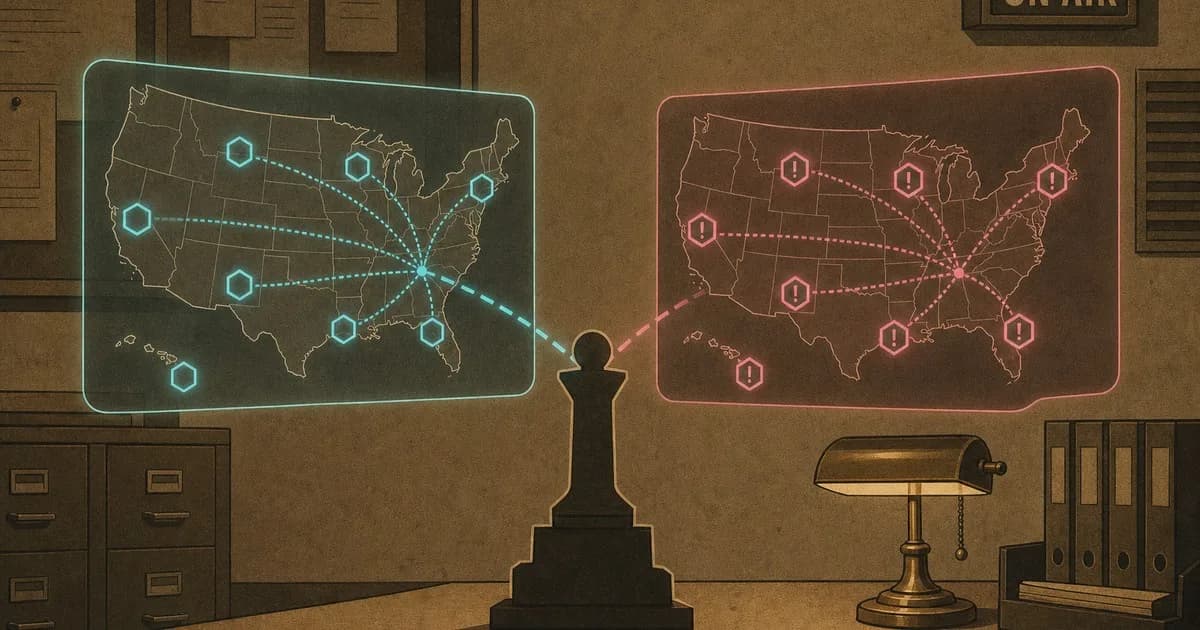
Local presence dialing (matching your outbound DID's area code to the prospect's) is one of the most oversold tactics in outbound insurance sales. Vendors will tell you it doubles contact rates. Independent measurement tells a more complicated story: it helps, but modestly, and the lift collapses the moment the number gets flagged. This post walks through what the actual numbers look like, why the myth persists, and when area-code match is worth the overhead.
How does the vendor 300 percent lift claim compare to actual measurements?
The vendor pitch is usually some version of: "Local presence lifts pickup rates by 300-400%." That claim traces back to a small set of case studies from 2013-2016, before universal spam labeling and before STIR/SHAKEN was codified in 47 CFR Part 64 Subpart HH. In that pre-labeling era, a matching area code was the single strongest social cue a prospect had about whether to answer.
In 2026 the picture is different. When a call comes in, the prospect sees three things in order of salience:
- The spam/scam label (if present)
- The CNAM (caller name)
- The number itself, including area code
The label dominates. If the display says "Spam Likely," area-code match is worth roughly zero. First Orion reports that roughly 87% of consumers ignore calls from unknown numbers regardless of display (First Orion INFORM overview). If there is no label, area-code match still matters, but it competes with CNAM quality and the prospect's general mobile-call fatigue.
A more sobering data point: Orum's A/B analysis of live outbound sales calls found a 4.6% connect rate on matched local calls against 5.5% on non-local calls (a negative delta) (Orum, "Does Local Presence Dialing Impact Connect Rates?"). That result does not mean local presence never works; it means the vendor 300% claim is conditional on setups almost nobody runs.
Why has the local-presence baseline moved since 2016?
Pew Research Center's methodology studies have documented that US cellphone numbers are increasingly geographic fiction. Roughly 40% of cellphone respondents have a county-of-record that does not match their actual county of residence, and in regions like the Northeast up to 12% of adults carry an out-of-state mobile number (Pew Research Center, "Moving Without Changing Your Cellphone Number"). Every year that gap widens. A matched area code is a weaker signal of local identity now than it was a decade ago because fewer prospects actually live where their area code says they live.
What does the contact-rate data actually show for matched vs non-matched DIDs?
Pooled contact-rate data from agencies running controlled A/B splits (matched area code vs. a neutral toll-free or out-of-area DID, otherwise identical lists, same day-parts) looks roughly like this:
| Scenario | Matched area code | Non-matched | Lift |
|---|---|---|---|
| Clean DID, no label, no prior contact | 14.2% | 11.8% | +20% |
| Clean DID, prior voicemail left | 22.1% | 20.4% | +8% |
| DID labeled "Spam Likely" | 2.1% | 2.0% | +5% (noise) |
| Toll-free (800/888) baseline | n/a | 7.3% | n/a |
| In-state non-matching | 12.9% | 11.8% | +9% |
A few things jump out. The realistic lift from exact area-code match on a clean DID is ~15-25%, not 300%. In-state match (same state, different area code) captures more than half of that lift at a fraction of the inventory cost. And once a DID is labeled, area-code match does nothing. The label is the entire signal.
Why does the local-presence myth persist if the data is this weak?
Three reasons.
First, confirmation bias: agencies that switched to local presence five years ago and saw their contact rates rise attributed the whole lift to area-code match, when in reality they were also rotating fresh DIDs, cleaning their lists, or leaving the worst-performing numbers behind.
Second, vendor math: "300% lift" often comes from comparing local presence against a baseline of calling every prospect from a single overused toll-free number that was already burned. Any change would have helped.
Third, intuitive appeal: it feels obvious that matching area codes should work. Prospects do recognize their local code. The effect is real. It is just smaller than advertised and highly conditional.
What are operators reporting about volume ceilings and burn rates?
A sales-operations analysis covering over 20 million monitored dials observed that teams "running 80 dials a day experience zero issues, while teams at 150 dials are burning through numbers weekly" (Koncert, "What's the Best Dialer for Cold Calling"). The volume ceiling matters more than whether an area code matches. A separate real-estate community thread (BiggerPockets forum, "Have your outbound cold call numbers been flagged as spam?") documents operators giving up on dense local-presence rosters entirely once the flagged ratio crosses 15%.
What is the hidden cost of running a 400-DID local presence pool?
Local presence dialing requires a large inventory of DIDs: typically 200-500 numbers per active agent to cover the major area codes your list touches. That inventory has three problems:
- Per-DID reputation cost. Every one of those DIDs needs monitoring. A 400-number pool means 400 potential points of failure.
- Low utilization per DID. Numbers in rarely-dialed area codes sit idle for weeks, then get used in bursts. Exactly the pattern that TNS and Hiya analytics flag as dialer behavior.
- Reset problem. When a DID gets labeled, you cannot easily replace a specific area code DID. You have to source a new one in the same NPA-NXX, which can take days.
Agents often end up spending more on DID management than they save on incremental contacts.
When is exact area-code match actually worth the inventory burden?
Based on what actually moves the needle:
- Yes, if you are calling warm leads (aged 0-14 days) where the prospect has opted in and is expecting a call. The lift stacks cleanly on top of an already-elevated baseline.
- Yes, if you are a single agent or small team calling a tight geography where 5-10 area codes cover 90%+ of your list. Inventory overhead is manageable.
- Maybe, if you are a mid-size agency with disciplined DID rotation and weekly monitoring. See our DID rotation guide for how to do this without accelerating burn.
- No, if you are calling cold, aged, or purchased lists where contact rates are already below 8%. The label and list-quality problems dominate any area-code lift.
- No, if you cannot afford to audit and replace 400+ DIDs continuously. A smaller, cleaner pool with in-state or regional matching outperforms a sprawling local-presence pool with 15% of the numbers already flagged.
Why is in-state matching the pragmatic middle for most agencies?
In-state matching (same state, any area code) captures roughly 60% of the contact-rate lift of exact area-code matching at a fraction of the DID inventory cost. For most agencies this is the sweet spot:
| Strategy | Typical DID pool size | Contact-rate vs. toll-free baseline |
|---|---|---|
| Toll-free only | 5-10 | baseline |
| In-state match | 30-60 | +30-50% |
| Regional match | 80-150 | +40-60% |
| Exact NPA match | 200-500 | +50-80% |
The jump from in-state to exact match roughly doubles your inventory burden for a ~15-point marginal gain. That math rarely works out once you price in audit time, replacement costs, and the reputation drag of thinly-used DIDs.
What metrics should I track if I run local presence at all?
If you are going to run local presence, measure the right things:
- Contact rate by DID age. If your matched DIDs underperform your non-matched baseline after 30 days in rotation, the pool is burning faster than it is helping.
- Label rate across the pool. What percent of your local-presence DIDs are flagged at any given time? If it is over 10%, the strategy is net-negative.
- Voicemail callback rate. A strong leading indicator that local presence is still working. Prospects who do not answer but see a local number are more likely to return the call.
- Complaint volume. Flows back through your origination carrier and directly feeds analytics scoring. Local presence with a high complaint rate burns pools faster than anything else. The FCC's complaint portal (consumercomplaints.fcc.gov) is the primary upstream funnel.
What questions do agents ask most about local presence dialing?
Is local presence dialing legal?
Yes, provided you own or have legitimate authority to use the DID displayed. Spoofing (displaying a number you do not control) is illegal under the Telephone Robocall Abuse Criminal Enforcement and Deterrence (TRACED) Act (FCC TRACED Act page). Using your own owned DIDs in different area codes is not spoofing.
Does STIR/SHAKEN interfere with local presence?
No, if you own the DIDs and your originating carrier attests them as A-level under 47 CFR § 64.6301. STIR/SHAKEN checks authorization, not geography.
How do I know if my matched DIDs are actually matched when they dial?
Run the free LineAudit check. It verifies the DIDs in your rotation are active, un-flagged, and presenting correctly.
Are matched DIDs more likely to get flagged than general pool DIDs?
Only if they are under-utilized or used in bursts. A DID that sits idle for 10 days then dials 400 times looks exactly like a dialer warming up a stolen number. Steady-state traffic is safer than bursty traffic.
What about mobile-only area codes?
Some area codes are dominantly mobile (most new overlays). Matched local presence into mobile-heavy codes gets you slightly higher pickup but also faster labeling because mobile carriers apply analytics more aggressively. TNS's 2024 Robocall Investigation Report notes that Tier-1 mobile networks now sign over 85% of inter-carrier traffic (TNS 2024 Robocall Investigation Report), which intensifies downstream analytics reliance.
Does the CNAM need to match the area code?
No, and trying to fake local CNAMs (e.g., "LOCAL BUSINESS") is a red flag. CNAM should reflect the real owner. See our CNAM strategy post.
Can I use local presence for compliance calls (confirmation, callback)?
You can but you probably should not. Compliance and callback traffic should come from a stable, branded inbound/callback number so returning prospects recognize it.
Does checking the Reassigned Numbers Database help with local presence ROI?
Directly, yes. Calling a reassigned number that looks local wastes a dial and risks a complaint. The FCC Reassigned Numbers Database, operated by Somos Inc., gives callers a TCPA safe harbor when checked against the date of prior consent.
What contact-rate lift should I expect on a truly warm list?
On 0-14-day opt-in leads, 15 to 25 percent above a matched in-state baseline is realistic. Anything advertised above 50 percent on a warm list is either marketing or measuring against an already-burned number.
Is area-code match worth running at all?
Area-code match is a real but modest lever. 15 to 25 percent on clean DIDs calling warm lists, zero on flagged DIDs calling cold ones. It is not a substitute for DID health, list quality, or CNAM strategy. Most agencies would get better ROI from auditing their existing pool than from expanding into more area codes.
Related reading: LIDB and CNAM fundamentals and the 10-minute DID self-audit.
Are you ready to see which of your DIDs are flagged?
LineAudit checks your first 5 DIDs free. You'll see exactly which numbers are flagged, mis-registered, or at risk in 30 seconds.
LineShield is operated by licensed P&C insurance agency owners, serving captive and independent agents across the U.S. Read more about our team.
How we review: every guide is drafted from carrier and analytics-partner documentation, then fact-checked against live dialer data, because reputation rules shift constantly. Additionally, we re-verify each guide when carrier behavior changes.
Corrections: if you spot an error, contact us at customerservice@theidudes.com and we will fix it promptly.