
Reassigned Phone Numbers: The TCPA Risk Agents Miss
Reassigned numbers silently wreck CNAM reputation, trigger TCPA liability exposure, and tank contact rates. Here is how insurance agents protect DIDs.
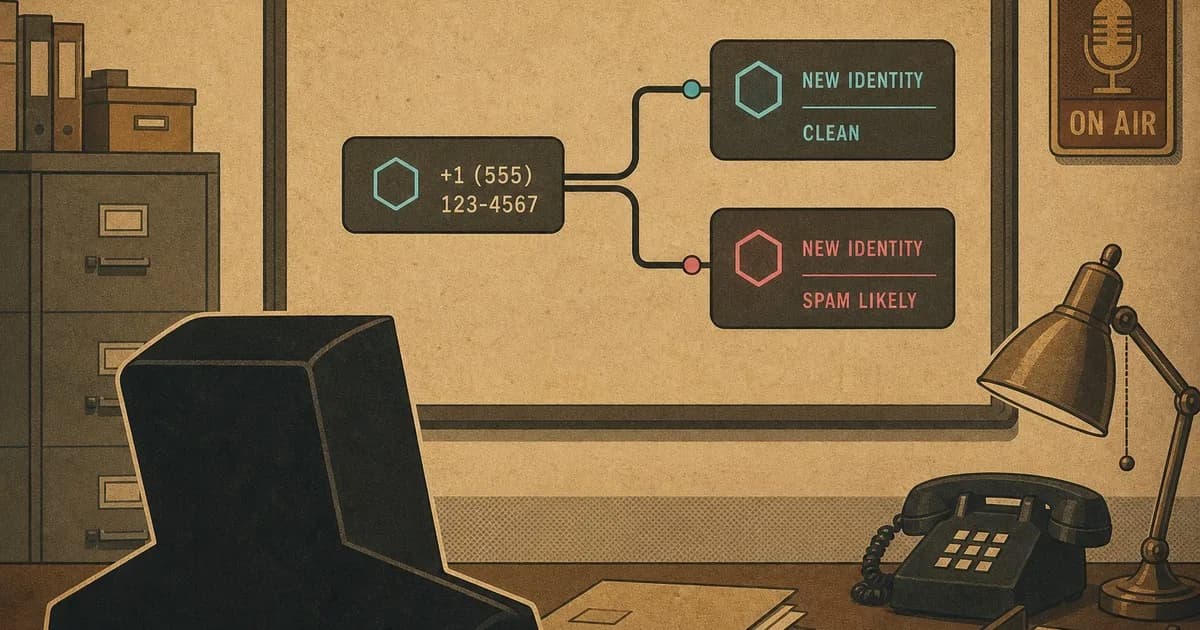
Reassigned phone numbers cost agents two different ways: TCPA statutory damages of $500 to $1,500 per call on the consumer side, and inherited spam flags on the DID side that suppress answer rates before the first dial. The FCC's Reassigned Numbers Database (RND), administered by Somos, only addresses the first problem. The second is a procurement issue most agencies don't discover until a quarter of contact rate is already gone.
Every phone number has a past life. When a consumer cancels wireless service, the carrier quarantines that number (typically 45 days for wireless, per FCC disconnection rules) before releasing it back to inventory. If your outbound DID or the consumer number you're dialing has been reassigned since the last scrub, your contact rate collapses, your TCPA exposure spikes, and your CNAM reputation quietly rots.
What does "reassigned" actually mean in the FCC framework?
The Federal Communications Commission (FCC) estimated in its December 2018 Second Report and Order that approximately 35 million U.S. numbers are disconnected and potentially reassigned each year. That figure preceded the creation of the RND, which went live November 1, 2021 and is operated by Somos under FCC oversight.
Reassignment cuts two directions agents must plan for:
- Outbound DID reassignment. The number you dial from. If your carrier releases an unused DID and it was previously flagged by Hiya Inc., TNS, or First Orion, you inherit that label the day it lights up.
- Consumer number reassignment. The number you dial to. Consent given in March is void if the line dropped in June and reassigned in July.
Only one of these scenarios has a federal database you can query.
What two costs do reassigned numbers actually create for agents?
How does TCPA exposure work on reassigned consumer numbers?
The TCPA's safe harbor, codified at 47 CFR 64.1200(m), requires the caller to prove three things: consent was obtained from the intended recipient, the RND was queried before the call, and the database returned a definitive "no" that turned out to be wrong. Miss the scrub, and every dial to a reassigned number carries the full $500-$1,500 statutory exposure per call.
Real money is moving here. Assurance IQ settled a TCPA class action for up to $21.875 million in 2023. Per-call damages multiply fast at campaign scale.
Why does CNAM and analytics degradation on reassigned DIDs hurt so much?
This is the cost most agents never see. When a DID transfers to you, carrier-side analytics engines (Hiya, TNS Call Guardian, First Orion, and the aggregators that feed AT&T, Verizon, and T-Mobile) do not reset their scoring. A number previously flagged "Spam Likely" or "Scam Risk" still carries that label in the analytics cache, which is why answer rates can drop 20-50% overnight after a labeling event.
The pattern is familiar inside agent communities. On Insurance Forums, one agent summarized it: "Spam labels appear when carriers detect patterns that look like spam, things like high call volume, low answer rates, or inconsistent caller behavior. One complaint can damage a number's reputation."
How do reassigned numbers compare to clean numbers on cost and risk?
| Metric | Clean, Aged DID | Reassigned DID (unchecked) | Reassigned Consumer Number (unchecked) |
|---|---|---|---|
| Typical answer rate | 15-25% | 4-11% | N/A (you answer) |
| CNAM flag risk (first 30 days) | Low | High | N/A |
| TCPA per-call exposure | $0 outbound | $0 outbound | $500-$1,500 |
| Time to rehabilitate | N/A | 30-60 days if caught early | N/A |
| Detection cost | Free audit | Free audit | $0.0005 per RND lookup |
Answer-rate ranges reflect the Hiya 2024 State of the Call finding that 46% of unidentified calls go unanswered, combined with operational peer data.
How do I actually check for reassignment on both sides of the call?
How do I check consumer numbers I am dialing to?
Use the FCC Reassigned Numbers Database at reassigned.us. Submit each number with the consent-capture date. The database returns yes / no / no-data. Only a definitive "no" grants safe harbor under 47 CFR 64.1200(m). Batch lookups run about $0.0005 per query at scale. Cheaper than a single TCPA settlement by five orders of magnitude.
How do I check outbound DIDs I am dialing from?
The RND does not cover this. You need CNAM and analytics monitoring across Hiya, TNS, and First Orion. Compare the currently-displayed name to what your carrier registered, and watch for week-over-week drift. A DID that arrives flagged "Scam Likely" on day one was burned before you got it. Return it within the carrier grace period.
What does the silent reassignment-damage pattern look like in production?
Most agencies don't discover reassignment damage until they notice a month-over-month contact-rate drop on a subset of DIDs. The pattern:
- Agency provisions 200 new DIDs in a local area code.
- First 30 days: mixed performance. Some DIDs pull 22%, some pull 6%.
- Agency blames the dialer, the script, or the list.
- Three months later, a reputation audit shows 40% of the DIDs were flagged at provisioning.
This is not a dialer problem or a script problem. It's a procurement problem. The fix is auditing every DID before it goes into rotation, not after. As CompliancePoint has documented, TCPA filings citing reassigned-number scenarios have been a material share of recent class action activity.
For deeper context, see Why Local Presence Dialers Stopped Working and Rotating DIDs Without Getting Burned. Inherited flags feed directly into how carrier reputation scoring works.
What does a reassignment-aware outbound workflow look like?
A mature outbound operation handles reassignment at three checkpoints:
- Procurement. Every new DID gets a CNAM and analytics check within 24 hours of provisioning. Flagged numbers are returned, not rehabilitated.
- Ongoing monitoring. Active DIDs are re-checked weekly. Flag drift is caught before it appears in the contact-rate report.
- Consent scrubbing. Consumer numbers are scrubbed against the FCC RND before each campaign, with the consent date on record and the response logged.
Operators who run all three checkpoints consistently report materially higher contact rates than peers who only scrub TCPA on the consumer side. The difference is the DID-hygiene work that carriers and dialer vendors will not do for you.
What questions do agents ask most about reassigned phone numbers?
How often are phone numbers actually reassigned in the United States?
The FCC's 2018 Second Report and Order estimated roughly 35 million numbers are disconnected annually. Wireless numbers are typically quarantined for 45 days before reissue. Landline quarantine can be shorter. Somos publishes aggregate query volume on the RND site.
Does the FCC Reassigned Numbers Database cover my outbound DIDs?
No. The RND is designed to protect callers from TCPA liability on consumer numbers. It does not track DID reputation, CNAM registration, or carrier analytics flags for the numbers you dial from.
Does an RND "no data" response mean I am protected?
Partially. 47 CFR 64.1200(m) grants safe harbor only on a definitive "no." "No data" leaves you in the same position as if you had not checked.
Can I rehabilitate a reassigned DID that came to me pre-flagged?
Sometimes. If the flag is soft (analytics-only, not carrier-registered), low-volume aging and correct CNAM registration can recover it in 30 to 60 days. Hard carrier-level scam blocks rarely recover. Return the DID.
What is the cheapest way to detect a reassigned DID?
A CNAM and analytics audit across Hiya, TNS, and First Orion. Running it at provisioning catches pre-burned numbers before they touch your dialer.
Is there a TCPA safe harbor for outbound DID reassignment?
No. TCPA safe harbor protects the called party. Your own DID's history is a commercial problem, not a regulatory one, though the cost of an inherited flag can exceed a TCPA penalty across a quarter of lost contact rate.
How long should a new DID sit before I dial from it at volume?
There is no regulatory answer. Operationally, aging a DID with 10 to 20 low-volume outbound calls per day for the first week while monitoring CNAM avoids triggering the "new number spike" heuristic that analytics engines use. Industry guidance from SaleSHive and Kixie aligns on this pattern.
What damages does the TCPA provide per reassigned-number violation?
$500 per negligent violation and up to $1,500 per willful violation, with no statutory cap. Class-scale claims can reach eight or nine figures, as the Assurance IQ settlement demonstrates.
Are you ready to see which of your DIDs are flagged?
LineAudit checks your first 5 DIDs free. You'll see exactly which numbers are flagged, mis-registered, or at risk in 30 seconds.
LineShield is operated by licensed P&C insurance agency owners, serving captive and independent agents across the U.S. Read more about our team.
How we review: every guide is drafted from carrier and analytics-partner documentation, then fact-checked against live dialer data, because reputation rules shift constantly. Additionally, we re-verify each guide when carrier behavior changes.
Corrections: if you spot an error, contact us at customerservice@theidudes.com and we will fix it promptly.